August 3, 2008
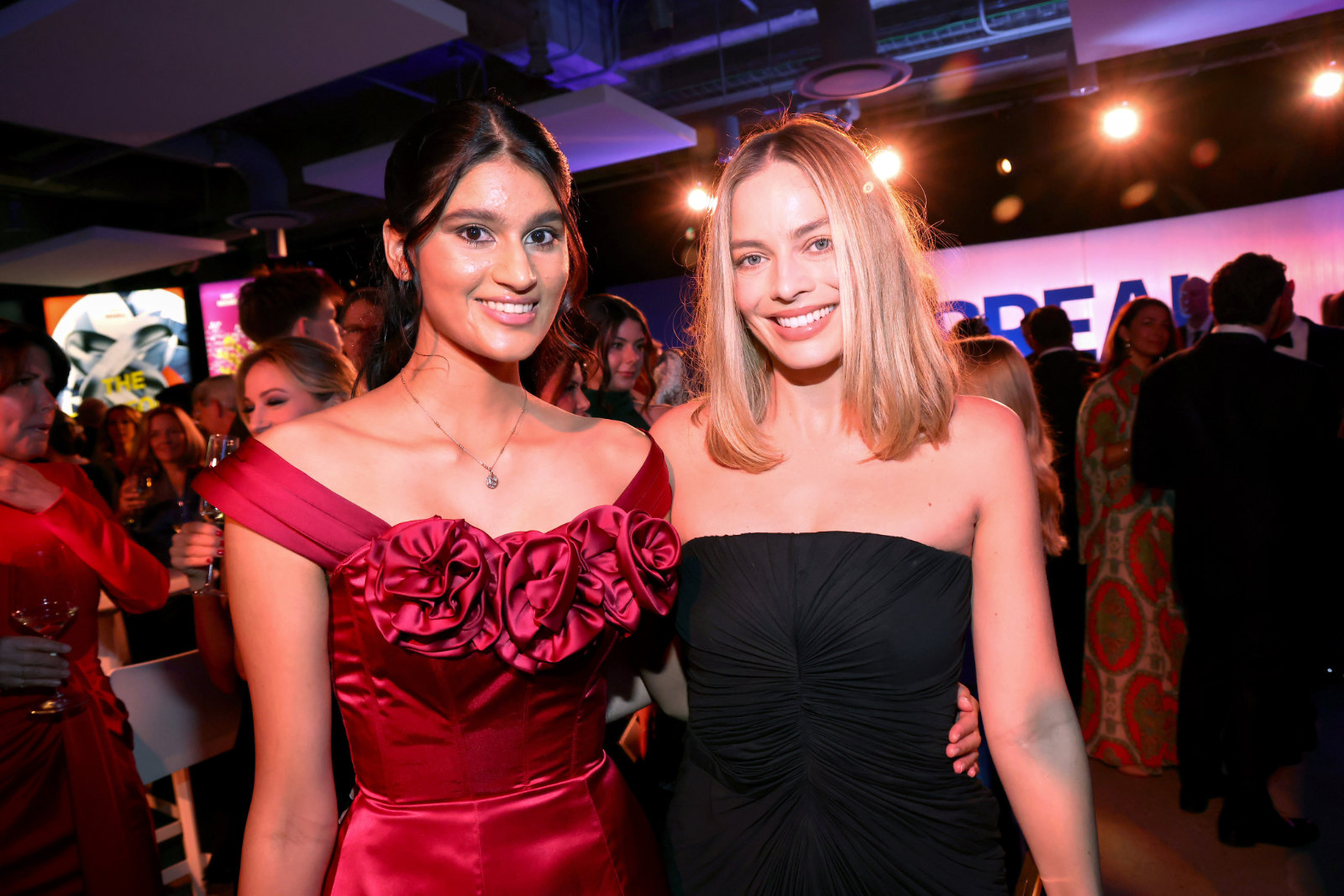
Caleb Alex from Servilles in Newmarket has been crowned New Zealand Hairdresser of the Year after taking out the Supreme Award at the prestigious LâOrĂ©al Colour Trophy Awards last night (August 2).
   At a glittering event attended by the countryâs top stylists and celebrities, Caleb was chosen from seven other Supreme Award finalists wowing the judges with his cropped feminine hairstyle with warm blonde colouring.
  The LâOrĂ©al Colour Trophy Awards were judged live in Auckland by a panel of three of the worldâs leading hairstylistsâUK-based Guy KrĂ©mer, South Africaâs Terence Jansen Van Vuuren and Caterina DiBiase of Australia.
  Mr Van Vuuren says Calebâs look displayed outstanding attention to detail with beautifully crafted colouring enhanced by a superb cut.
  âThis forward thinking design is original and unique. It is the beautiful marriage of texture and colour that captures the spirit of todayâs look.â
  Australian judge Caterina DiBiase says New Zealand hairstyles are at the cutting edge of global fashion trends inspired by the new direction towards shorter styles.
  âInternationally weâre seeing strong lines, soft texture and lots of colour and those trends are well and truly reflected in what we have seen today at New Zealandâs LâOrĂ©al Colour Trophy Awards.â
  LâOrĂ©al Colour Trophy is the only hairdressing competition in New Zealand that requires finalists to go head-to-head in a live competition and re-create their photographic entry on the day of the awards.
  The judges score entrants on creative and evocative hair colour, an innovative and fashion-led cut, inspired hairstyling and the finish and overall look of fashion and make-up.
  Runner-up in the Supreme Award was Aucklandâs Sasha Lenski from Bettjemans Salon in Orakei.
  Three other individual awards were also announced. The Young Colourist Award went to Maree Thompson from Venom in Invercargill while the Couleur Pour Hommes Award (colour for men) was presented to Aimée Packer from Servilles in Albany (Auckland).
  Gabriella Andersson from Servilles Newmarket (Auckland) took out the Au Début Award, presented to a hairdresser who has never been a finalist in the awards before.
  The Salon of the Year Award went to Bettjemans (Orakei, Auckland) and four special Awards were also announced including the Peopleâs Choice Award, the Photographersâ Award, the Hairdressing Magazine Award and the Fashion Magazine Award.
  LâOrĂ©al Professionnel general manager Rachel Neill says she is rapt with the vibrancy and creativity displayed by the winners.
  âEach year, we continue to be blown away by the high calibre of entries and winners. It shows that diversity, ingenuity and style are alive and well in our industry.
  âLâOrĂ©al Professionnel is committed to supporting and inspiring New Zealand hairdressers. These awards are a great way of doing just thatâencouraging and recognising those who push the boundaries of creativity in our industry.â
  More than 1,000 of New Zealandâs leading hairdressers, celebrities and fashionistas celebrated the award winners in style. The show was hosted by Petra Bagust and Peter Urlich.
  More on LâOrĂ©al Colour Trophy appears in the next New Zealand print edition of Lucire.
I know there is still poverty and hardship in Mumbai, but there is also a richer, modern side that Stanley Moss got to see when he had an extended stay in India. The Four Seasons Hotel Mumbai, already open, but going fully online in September, shows that the Indians can do luxury city hotels as well as anyone else.
  We already know India is home to top-notch properties like the Manor, which we proïŹled last month, but Four Seasons gives a comfortable level of predictability in terms of amenities, while still providing some uniqueness inspired by the area.
  In Mumbaiâs case itâs the San-Qi restaurant and a yoga and meditation room.
   The first property ever reviewed by Lucire was a Four Seasons, and I had the privilege of staying at the Regent Bangkok, which was another Four Seasons property, despite the name.
   Cars are always my way of telling how afïŹuent a place isâor, in some cases, how deep the division between rich and poor is. The Four Seasons Mumbai can chauffeur you in a BMW 7-series limousine, so anyone expecting a ride from the airport in a Hindustan Ambassador will have to head to the taxi rank for that experience. In the car park are newish Hondas and Marutis and the top luxury brands.
  India is busting stereotypes every day as it grows in inïŹuence and afïŹuence, all while retaining democratic freedoms. Itâs the country I have my eye on as this century unfolds, rather than Red China. Iâm trusting that the theory that strong economies help the poor holds up in India. Â
August 2, 2008
[Cross-posted] Remember Xanadu? Itâs become somewhat of a cult hit even though in 1980 it was considered Olivia Newton-Johnâs mega-turkey. Stylistically, it sits uncomfortably between the 1970s and 1980s, as though there was a vacuum in between the decades. In one scene, Michael Beck insists to Gene Kelly that âItâs the â80sâ, but you know that it must have been shot in 1979 and people had not rebelled against disco at the time.
  Of course, reality tells us that you canât mark off decades so clearly: elements of the 1970s necessarily continue into the 1980s, and some of what we regard as 1980s style had their roots in the decade before.
  But by 1982 thereâs no doubt that one was in the 1980s: Rick Dees poked fun at âDisco Duckâ on Solid Gold and even ABBA no longer could do number-one hits.
  While there arenât clear decade-dividers, there is a sense among us, as people, to want to bring new things into each era. Who can forget the sense of optimism we all faced as January 1, 2000 came around, even though it wasnât technically the new millennium yet? We saw the year number beginning with 2 and it was a big deal. All those science-ïŹction ïŹlms predicting a new era in the twenty-ïŹrst century brought with them a sense of anticipationâand those that didnât forecast the end of mankind in 1999 suggested that we might be a nicer bunch in the 2000s than we were in human historyâs most violent, murderous 100 years.
  Here we are in 2008 and not that much has changed. We deïŹnitely arenât nicer; in western countries we might well be more paranoid. But these are, in my reckoning, not twenty-ïŹrst-century issues. This is leftover business from the twentieth century that we have not sufïŹciently dealt with, and we still have the opportunity to do something about it.
  Terrorism and nutty red brigades were with us through much of my childhood but various western democracies thought they could turn their backs on them. Arafatâs PLO came to the fore in the 1970s, not the 1990s. The negative effects of globalization have been with us since the postwar period. As has communism in Red China, which has brought us the censorship that western media are only now, with days to go before the Beijing Olympics, making a song and dance about.
  Just as a new decade does not begin to be âfeltâ till two years in, a new century wonât be felt till, I reckon, its second decade begins.
  The twentieth might well have been marked by our arrogance and over-dependence on technology as the Titanic set sail. And as that century dawned, indeed we were bullish about globalization brought about by shipping routes and the British Empire. As the Titanic sank, we were reminded that we could never be over-conïŹdent about technology. We might have said a few years before that we had too much to lose from going to war, with the expansion of global trade, but humankind sank into the Great War with new innovations of aeroplanes and machine-guns.
  Yet humans remain optimistic as we head into the 2010s. I would say there are more Americans hopeful about Sen. Obamaâs race toward the White House than Sen. McCainâs at this stage, regardless of the latterâs attack advertisingâbecause Obama has not deïŹned things well. There is a sense of casting off the twentieth century. You see the same in so many areas as people question the economic system, politics, and how we are exposed to global disasters through the media. You also see questioning of the media. All of this inquisitiveness seems to be happening on a wider scale, maybe sparked off by authors and thinkers writing in the last part of the twentieth century trying to lay some useful groundwork for the rest of us as their ideas got out.
  What sort of century is emerging? We would like to think that we can solve all the worldâs problems because we are blessed with the ability and desire; yet institutions seem to constantly thwart our collective wills. Various individuals take matters into their own hands, be they international philanthropists setting up funds for poorer countries or bloggers trying to break the mainstream mediaâs deadlock on what we are allowed to know.
  Meanwhile, corporations try to feed consumers products as a substitute for Orwellian somaânot necessities which we should look at having, but unnecessary items that take us away from being true to ourselves.
  I donât have the answers to what sort of century we will face. I know what sort of century I would like to face. One where people from all walks of life can realize their dreams, where people can receive the education they want, and where deceit and avarice are shown to be harmful to the collective good. One where imagination and innovation drive forward human progress, rather than impeded by society or corporations because they view them as threats.
  The answer might lie in examining the changes in style between decades. Were they the result of companies dictating fashion or some deeper change in the Zeitgeist, driven by many individuals?
  I like to think it was the latter. When the end of 1999 came about, I certainly was not told to head into town to see how crowded or fun Wellington city was. I just went. Something drew me to it.
  There is something to be said about people driving the mood of the planet, and how we still have a chance to shape the twenty-ïŹrst centuryâs destiny as we cast off the negative effects of the previous one.
  We know where we goofed. We have seen it in the destruction of freedom or the greed of certain parties; we have seen it through a failure to understand other cultures or how institutions block aid from getting to the people. We know there must be solutions, and we now have a twentieth-century inventionâthe internetâwhere we can band together, make some noise and maybe generate real progress. We just need to wake up, realize what is useless in our lives, what we can do for ourselves and others, and get back to ïŹrst principles. Technology, for instance, is here to serve us, rather than direct us into buying the next little toy to waste away whatever precious seconds we have each day.
  We might deïŹne the new century through new energies (hybrid cars are so last centuryâwe can do better), through new ways of reaching people in need (which we are already doing through unprecedented dialogue), and through redeïŹning institutions to turn them into agents of change rather than stiïŹng collectives of people.
  Itâs through simplifying our lives and our directions that we can sense what we might want in the twenty-ïŹrst century. Have a thinkâand maybe we can just put something out there into that Zeitgeist as this century really begins unfolding.
Keira Knightley says that she feels inadequate alongside better qualiïŹed actors because she didnât go to university, according to next monthâs Tatler. This is despite Miss Knightley, as Forbes revealed, being the second most highly paid actress in Hollywood. But that feeling of needing a little more is a refreshing one among the highest-proïŹle members of the acting profession.
  While there are many productive citizens out there who lack university qualiïŹcationsâand some of historyâs greatest players also lack a degreeâI say Miss Knightleyâs lament serves as a better example than those ill-qualiïŹed actors who believe they are the beeâs knees without having exerted academic effort.
  For even those great players in history had done their share of critical thinking rather than drift through life with whatever they knew at the end of high school.
  Yet we are witnessing an occidental society that worships actors and athletes ahead of, say, Third-World charity workers and nurses.
  In the fashion media it has been somewhat concerning to see GisĂšle BĂŒndchen, one of the few younger models who might append the super preïŹx to her title, being reported as âTom Bradyâs girlfriendâ as though she were some possession. Athletes, it seems, outrank supermodels in the mass mediaâeven the specialist media, ironically, such as CondĂ© Nastâs GQ. Never mind that BĂŒndchen is the best paid model in the world: she is now grouped in as a junior member of the Brady Bunch.
  I have nothing against actors and athletes, mindâthey should command respect for their inspiration and their service to their countriesâbut I would hold back that respect if any did not further their duties by setting a positive example for young people to follow.
  Tireless and continual industry and the quest for higher knowledge inspire our youth to realize their dreams. Discouraging higher education in favour of easy street is not an example we need. Some, I fear, are guilty of that with their drug habits and vice, all in view of the paparazzi.
  And while some universities indulge in forcefeeding young people with facts to regurgitate, rather than have them engage in critical thinking, the mere exposure to higher learning in a ïŹeld one loves can still do wonders for a personâs potential.
  For most of us, there is no easy path where we can get through on the mere cult of our personalities.
  These days, Miss Knightley is making up for her feeling of inadequacy through reading, a course of action I would certainly recommend to those who might have forgone higher education.
  I have lent two books to one of our assistants here who is taking a break from university because I do not want to see her put aside her knack for critical thinking.
  Miss Knightleyâs reading expands her horizons, which I think will set her in good stead as an actress who can look forward to a long career. This act alone shows that she should not feel inadequate: she is taking her future into her own hands and ïŹlling in the gaps that she perceives in her life. If only more of us took this self-improving route.
  She is someone who has thought about herself and her goals, and her frank admission in Tatler may have more positive effects than she planned.

Above: Keira Knightley in her Academy Award-nominated role in Atonement. |
Although sheâs received more press in fashion magazines this year than any other, and a recent Forbes list puts her as Hollywoodâs second-highest-paid actress, Keira Knightley admits to Tatler, in the next issue on sale Thursday, that she feels inadequate next to better educated actors because she never went to university.
  âNot going to university did give me an incredible driving force because it leaves you with a slight chip on your shoulder. It makes me feel I am going to read absolutely everything so I can prove that I am not stupid,â she tells the magazine.
  In a preview of the article in The Daily Telegraph, Knightley lists âa biography of Albert Speer, a history of the Vietnam War, the treatises of Mary Wollstonecraft and Germaine Greerâs feminist text The Female Eunuchâ on her current reading list.
  Knightley was beaten to the top spot in the Forbes list by Cameron Diaz, who earned $50 million last year versus her $32 million. With their male counterparts, the gender gap remained apparent: Will Smith was number one with $80 million, followed by Johnny Depp with $72 million.
August 1, 2008
We were supplied seven images of Lydia Hearst modelling Myla in our cover story this week. Hereâs the one we didnât run in the main part of the website for space reasons.
July 31, 2008

One image that wasnât mentioned in Monica Waldronâs report from the MayâJune exhibition of Patrick LichïŹeldâs work was the above shot of Mick and Bianca Jagger on their wedding day in St Tropez. This was taken right after the Jaggersâ wedding on May 12, 1971, and was indeed part of the exhibition, and is yet another example of LichïŹeldâs ability to capture the moment. Itâs one of my favourites.
  As Monica reported, many of his portraits are done with great sensitivity, not necessarily of the most extroverted subjects. The above is spontaneous, as many of LichïŹeldâs images are, and can only be from the early 1970s, not because of photographic style, but because of Jaggerâs clothing and, for car spotters like me, the shape of the carâs C-pillar. It must be one of those rare times that it is not the womanâs clothing that dates an image most: weddings, in the 21st century, are no longer as demanding of tradition, and Biancaâs garb, while probably sexier than the norm, could be considered an example of one brideâs uniqueness. In 1971 it would be considered far more way-out.
  Unlike this image, and perhaps in contrast with Monicaâs views, what was remarkable to me was how timeless many of LichïŹeldâs shots were. One might say that emotion is timeless, hence the perceived energy emanating from the shots never dates, but the glowing image of Olivia Newton-John, free of heavy make-up, has little to date it back to 1973 in the eyes of the layman like me. Ditto Lichfieldâs nude of actress Jane Seymour, which we did not feature.
  And for celebrity-watchers, that is indeed Joanna Lumley on our web-edition cover, photographed before Sapphire & Steel, The New Avengers, even before her appearance in On Her Majestyâs Secret Service. The 1965 photograph has, admittedly, datedâbut, principally, Miss Lumleyâs swimwear is the culprit.
A recurring theme at Lucire is studying the international Zeitgeist. Being a magazine with its roots on the internet, rather than print, we have always looked at trends from a global perspective, rather than individual, local ones. Today: how different are the trends at, say, Hennes & Mauritz and antipodean retailer Max? Once again, we think thereâs a prevailing global mood, typiïŹed this season by ïŹoral prints and blueâgreys. And then there are those exceptionsâMax has a splash more colour with its Amaryllis print dress (NZ$129) and suede peep toe shoe (NZ$139).
July 30, 2008

I am catching up on emails today after yet another coldâit has been a bad winter for âïŹus here. For those expecting regular updates during the latter half of July, Iâm sorry that it has been a tad quiet hereâquite a few of us have had to take time out. Even in California, where itâs summer.
  Last month, we mentioned an advertising campaign for the Toyota Camry being run here on Lucire, entitled If Looks Could Kill.Â
  Who would have thought that among my emails was an introduction from Uduak Oduok of Ladybrille, who has written for Lucire in 2006, to the actress who starred in the campaign, Femi Emiola.
  Uduakâs interview with Femi can be found on her site.
  Femi Emiola is a true citoyenne du monde: Iowa-born, she has spent many years growing up in different parts of the world, including the Philippines and Nigeria. These days, sheâs in Los Angeles. Uduak calls her âHollywoodâs next breakout starââwe think thatâs a very fair description. Her starring role in the Toyota commercials was a strong one, showing her excellent acting capabilities.
July 28, 2008
While the New Zealand media did not say much about the visit of US Secretary of State Condoleezza Rice at the timeâtoo much time spent on the Barack Obama world tour, perhapsâthe fashion industry can at least be happy with TV Oneâs prime-time report that she indulged in shopping for Kiwi clothing while here, with local designer Adrienne Winkelmann.
  It is trivial, and itâs probably more coverage on a Condi-related item than any other broadcast here over the last week, since the Secretary popped by on Friday for a 24-hour visit.
  But the report, by a woman, did the Secretary of State no favours on several counts.
  While itâs lovely for our economy that she did indeed shop, itâs not the sort of news report that one would do if the Secretary were male. Well, at least not as part of the main programme. Human interest stuff, yes.
  But to refer to her twice as âMs Riceâ I thought was plain insulting.
  I know: I called her Condi just now, which could be highlighted by some feminists as being inappropriate, but I have on occasion referred to men in positions of power by a diminutive form of their Christian names.
  But when someone has a doctorate and is commonly known for it, this either showed ignorance on the part of the reporter, the usual anti-Bush bias that one sees in New Zealand that appeals to the majority, or, even worse, sexism in a country that ïŹrst recognized the womenâs suffrage movement.
  She has, after all, been in her position for over three and a half years.
  And now we must look nearly as bad as the whites during Birmingham, Ala.âs pre-Civil Rights era that she witnessed ïŹrst-hand.
   It is about respecting the person in question. The Prime Minister here, I understand, prefers Miss. The Deputy PMâa manâprefers Dr. Both are addressed accordingly in the press.
  It was a real shame Dr Riceâs qualiïŹcation could not be recognized in the broadcast and I cannot help but think her gender had something to do with it.
  Fortunately, the same networkâs web page about the story uses her full name, her surname or âSecretary of Stateâ.
Next Page »
|
|
|
|
|
 |